
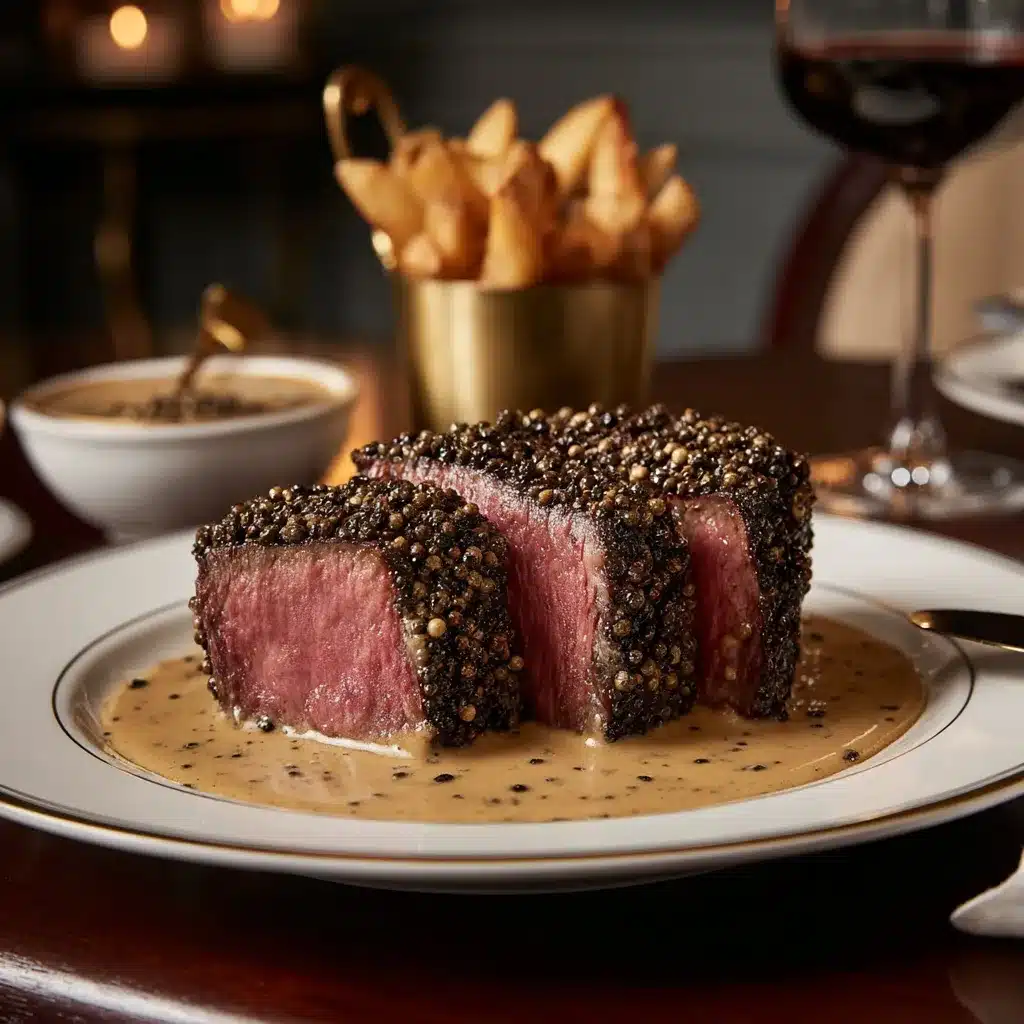
Steak au Poivre has always been my go-to dish for special occasions. There’s just something about the perfect blend of peppery crust and tender, juicy meat that makes it truly irresistible. I remember the first time I tried Steak au Poivre – it was at a cozy little bistro in Paris, and the moment I took that first bite, I was hooked. The way the peppery crust crackled under my fork, giving way to the melt-in-your-mouth steak beneath, was an absolute revelation. From that day on, I knew I had to master this classic French dish in my own kitchen.
Why This Steak au Poivre Recipe Will Become Your Go-To
The Secret Behind Perfect Steak au Poivre
What sets this Steak au Poivre recipe apart is the attention to detail and the perfect balance of flavors. I’ve spent years perfecting the technique, and I’m excited to share it with you. The key is in the way the steak is seared, the quality of the peppercorns used, and the simple-yet-sophisticated sauce that ties it all together. Once you try this method, you’ll never go back to ordering Steak au Poivre at a restaurant – it’s that good!
Essential Ingredients You’ll Need
- Beef tenderloin or strip steak: This is the star of the show, so you’ll want to choose a high-quality cut of meat that’s at least 1-inch thick.
- Whole black peppercorns: Freshly cracked black peppercorns are essential for that signature peppery crust.
- Cognac or brandy: This adds a lovely depth of flavor to the sauce.
- Heavy cream: The cream helps to create a rich, velvety texture in the sauce.
- Butter: A touch of butter at the end adds a luxurious mouthfeel.
- Salt and pepper: Simple seasonings to enhance the natural flavors of the steak.
Step-by-Step Steak au Poivre Instructions
Preparing Your Steak au Poivre
Steak au Poivre is a relatively quick and easy dish to prepare, with a total active time of just about 30 minutes. You’ll need a heavy-duty skillet or cast-iron pan, a meat mallet or tenderizer, and a few other basic kitchen tools.
1- Start by patting the steak dry with paper towels and generously seasoning it with salt and freshly cracked black pepper on all sides.
2- Use a meat mallet or tenderizer to gently pound the peppercorns into the surface of the steak, ensuring they adhere evenly.
3- Heat a large skillet or cast-iron pan over high heat until it’s smoking hot. Add a tablespoon of oil and carefully add the steak, searing it for 2-3 minutes per side to get a beautiful brown crust.
4- Once the steak is seared, transfer it to a plate and let it rest for 5 minutes.
5- In the same pan, deglaze with a splash of Cognac or brandy, scraping up any browned bits from the bottom of the pan.
6- Reduce the heat to medium, then whisk in the heavy cream and let the sauce simmer until it’s thickened slightly. Finish by swirling in a tablespoon of cold butter.
Pro Tips for Success
The key to perfect Steak au Poivre is all in the sear. Make sure your pan is ripping hot before adding the steak, and don’t be tempted to move the meat around too much – let it develop that gorgeous crust. Also, be generous with the peppercorns – the more the better! And don’t forget to let the steak rest before slicing into it, as this allows the juices to redistribute throughout the meat.
Serving and Storing Your Steak au Poivre
Perfect Pairings for Steak au Poivre
Steak au Poivre is the ultimate date night or dinner party dish. Serve it alongside a simple green salad, roasted potatoes or crispy fries, and a full-bodied red wine like Cabernet Sauvignon or Malbec. For a special occasion, you can’t go wrong with a rich, creamy side like Dauphinoise potatoes or a decadent mushroom risotto.
Storage and Make-Ahead Tips
Leftover Steak au Poivre will keep in the fridge for up to 3 days. To reheat, simply slice the steak and gently warm it in the sauce over low heat. You can also freeze the cooked steak and sauce separately for up to 2 months. Thaw in the fridge overnight before reheating.
For a make-ahead meal, you can sear the steak in advance and store it in the fridge or freezer. Then, when you’re ready to serve, simply reheat the steak and make the sauce – it’ll come together in a snap.
Variations and Dietary Adaptations for Steak au Poivre
Creative Steak au Poivre Variations
While the classic Steak au Poivre is hard to beat, you can certainly get creative with some fun twists. Try using a different type of peppercorn, like pink or Szechuan, for a unique flavor profile. You can also experiment with infusing the sauce with herbs like thyme or rosemary. For a seasonal twist, top the steak with roasted garlic or caramelized onions.
Making Steak au Poivre Diet-Friendly
To make this dish a bit more diet-friendly, you can opt for a leaner cut of steak, like a top sirloin or flank steak. For the sauce, use half-and-half or milk instead of heavy cream. And if you’re looking to go dairy-free, you can try substituting the butter with a plant-based alternative.
Frequently Asked Questions
Q: Can I use a different type of peppercorn besides black?
A: Absolutely! While the classic Steak au Poivre calls for black peppercorns, you can experiment with other varieties like pink, green, or even Szechuan peppercorns. Each will lend a unique flavor profile to the dish.
Q: How do I know when the steak is perfectly cooked?
A: The best way to ensure your Steak au Poivre is cooked to your liking is to use a meat thermometer. For medium-rare, you’re looking for an internal temperature of 130-135°F. Remember, the steak will continue to carry-over cook as it rests, so aim for a slightly lower temperature than your desired doneness.
Q: Can I make this dish in advance?
A: Absolutely! Steak au Poivre is a great make-ahead meal. You can sear the steak and store it in the fridge or freezer until you’re ready to serve. Then, simply reheat the steak and make the sauce when you’re ready to eat.
Q: How do I scale this recipe for a crowd?
A: This recipe is easily scalable. For every 1 pound of steak, use about 1 tablespoon of whole peppercorns and adjust the other ingredients accordingly. Just be sure to work in batches when searing the steaks to maintain that perfect crust.
Q: What should I do if the sauce breaks or separates?
A: If your sauce starts to look a bit curdled or separated, don’t worry! Simply remove the pan from the heat and whisk in a tablespoon or two of cold butter. The butter will help to emulsify the sauce and bring it back together.

Steak au Poivre
- Total Time: 30
- Yield: 4
Description
Steak au Poivre is a classic French bistro dish featuring tender, juicy steak cooked to perfection and smothered in a rich, creamy peppercorn sauce. This quick and easy version delivers all the flavor in just 30 minutes.
Ingredients
– 4 (6-oz) beef tenderloin steaks
– 2 tbsp cracked black peppercorns
– 2 tbsp olive oil
– 2 tbsp brandy
– 1 cup heavy cream
– 2 garlic cloves, minced
– 1 shallot, finely chopped
– 2 tbsp Dijon mustard
– 2 tbsp unsalted butter
– 2 tbsp chopped fresh thyme
– Salt and pepper to taste
Instructions
1. 1. Pat the steaks dry and generously season all over with salt and cracked black pepper.
2. 2. Heat the olive oil in a large skillet over high heat. Sear the steaks for 2-3 minutes per side until a nice crust forms.
3. 3. Carefully add the brandy to the pan and let it flame for 30 seconds to deglaze.
4. 4. Reduce heat to medium-low and add the heavy cream, garlic, shallot, and Dijon. Simmer for 5 minutes, stirring frequently, until the sauce thickens.
5. 5. Remove the pan from heat and stir in the butter until melted and combined.
6. 6. Serve the steaks immediately, spooning the peppery cream sauce over the top. Garnish with fresh thyme.
Notes
– For best results, use high-quality beef tenderloin steaks.
– Feel free to experiment with different peppercorn varieties like pink or green.
– Pair with roasted potatoes and a green salad for a complete French-inspired meal.
- Prep Time: 10
- Cook Time: 20
- Category: Main Courses
- Method: Stovetop
- Cuisine: French
Conclusion
Steak au Poivre is a classic French dish that’s sure to impress your friends and family. With its perfectly seared crust, tender interior, and rich, velvety sauce, it’s the ultimate indulgence. I hope this recipe helps you master this culinary masterpiece in your own kitchen. Give it a try, and let me know how it turns out – I can’t wait to hear what you think!