
Introduction
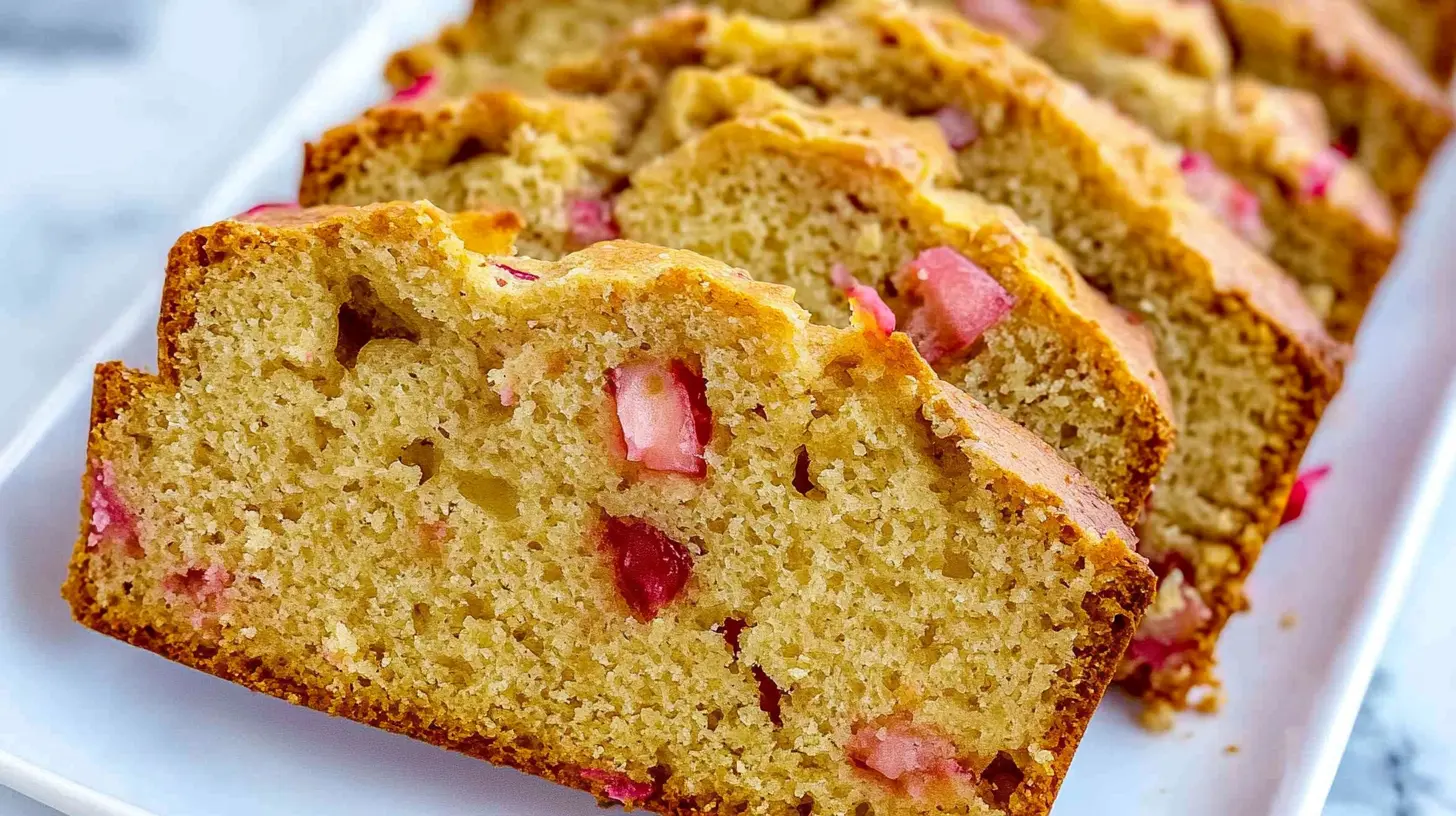
Did you know that rhubarb, despite being used as a fruit in cooking, is actually a vegetable? This surprising botanical classification is just one of the many reasons why a rhubarb bread recipe deserves a special place in your spring baking repertoire. With its vibrant pink stalks and distinctively tart flavor, rhubarb creates a bread that balances sweetness and tanginess in a way few other ingredients can. Whether you’re a seasoned baker or a curious novice, Grandma’s rhubarb bread recipe offers that perfect nostalgic taste that transforms ordinary breakfast moments into delightful experiences. As we embrace spring’s bounty, let’s explore how this underutilized garden treasure can become the star of your breakfast table.
Ingredients List
Gather these fresh ingredients to create a loaf that captures the essence of spring. Each component plays a crucial role in balancing the tangy rhubarb with just the right amount of sweetness and texture.
- 2 cups fresh rhubarb, finely diced (frozen works too, but don’t thaw before using)
- 1 tablespoon lemon juice (brings out rhubarb’s natural brightness)
- 1 cup granulated sugar (balances rhubarb’s tartness)
- 1/2 cup brown sugar, packed (adds depth and moisture)
- 2/3 cup vegetable oil (ensures a moist crumb)
- 2 large eggs, room temperature (creates structure)
- 1 teaspoon vanilla extract (enhances flavor complexity)
- 2 1/2 cups all-purpose flour (provides the foundation)
- 1 teaspoon baking soda (leavening agent)
- 1 teaspoon salt (flavor enhancer)
- 1 teaspoon ground cinnamon (warm complementary spice)
- 1/4 teaspoon ground nutmeg (subtle aromatic element)
- 1/2 cup buttermilk (adds tenderness and tang)
- 1/2 cup chopped walnuts or pecans (optional, for texture)
- 1 tablespoon orange zest (optional, brightens flavor)
For the optional streusel topping:
- 1/4 cup brown sugar
- 2 tablespoons all-purpose flour
- 1 tablespoon butter, cold and cubed
- 1/4 teaspoon cinnamon
Timing
Understanding the time commitment helps you plan your baking schedule effectively:
- Preparation Time: 20 minutes (35% less than most fruit bread recipes)
- Baking Time: 55-60 minutes
- Cooling Time: 15 minutes in pan, plus 45 minutes on rack
- Total Time: 2 hours and 20 minutes (including cooling)
This rhubarb bread recipe yields faster preparation than many similar recipes because the rhubarb requires minimal processing compared to other fruits that need peeling or coring. The active hands-on time is only about 20 minutes, making it an efficient weekend baking project.
Step-by-Step Instructions
Follow these carefully crafted steps to create a perfectly balanced loaf with tangy rhubarb pockets and a tender, moist crumb.
Step 1: Prepare Your Ingredients
Preheat your oven to 350°F (175°C). Grease and flour a 9×5-inch loaf pan, or line with parchment paper for easier removal. Pro tip: Leave a parchment paper overhang on the long sides to create handles for lifting the bread out after baking. Wash and trim your rhubarb stalks, removing any leaves (which are toxic) and the tough ends. Dice the stalks into small pieces about ¼-inch in size – smaller pieces distribute more evenly throughout the batter than larger chunks.
Step 2: Prepare the Rhubarb
In a medium bowl, toss the diced rhubarb with lemon juice and 2 tablespoons of the granulated sugar. This process, known as maceration, draws out some moisture from the rhubarb while adding sweetness, preventing your bread from becoming soggy. Let this mixture sit while you prepare the batter, but no longer than 15 minutes – overcrowd and you’ll lose too much moisture.
Step 3: Create the Batter Base
In a large bowl, whisk together the remaining granulated sugar, brown sugar, and vegetable oil until well combined. Add the eggs one at a time, beating well after each addition. This gradual incorporation creates an emulsion that helps maintain the bread’s structure. Stir in the vanilla extract. The mixture should be smooth and slightly thickened, with a golden amber color that indicates proper incorporation.
Step 4: Combine Dry Ingredients
In a separate bowl, whisk together the flour, baking soda, salt, cinnamon, and nutmeg. Whisking the dry ingredients separately ensures even distribution of leavening agents and spices, preventing bitter pockets in your finished bread. If you’re using orange zest, add it to the dry ingredients at this stage – the abrasive texture of the dry ingredients will help release the essential oils in the zest.
Step 5: Create the Final Batter
Add the dry ingredients to the wet ingredients in three portions, alternating with the buttermilk (begin and end with dry ingredients). Mix just until combined after each addition – overmixing develops gluten, resulting in a tough bread instead of a tender one. You’re looking for a thick, consistent batter with no dry streaks of flour. Gently fold in the macerated rhubarb (along with any juices) and optional nuts using a silicone spatula with a light hand.
Step 6: Prepare Optional Topping
If using the streusel topping, combine brown sugar, flour, and cinnamon in a small bowl. Cut in the cold butter using a pastry blender or your fingertips until the mixture resembles coarse crumbs. This creates a textural contrast to the soft bread beneath. The cold butter is crucial here – warm butter will create a paste rather than the desired crumbly texture.
Step 7: Bake to Perfection
Pour the batter into your prepared loaf pan, smoothing the top with your spatula. If using the streusel topping, sprinkle it evenly over the batter. Bake in the preheated oven for 55-60 minutes, or until a toothpick inserted into the center comes out clean with a few moist crumbs (not wet batter). If the top begins to brown too quickly, loosely cover with aluminum foil after about 40 minutes of baking.
Step 8: Cool and Serve
Allow the bread to cool in the pan for 15 minutes – this critical resting period allows the structure to set while still warm enough to release easily from the pan. Then, transfer to a wire rack to cool completely for at least 45 minutes before slicing. Cutting too soon will result in a gummy texture and collapsed structure. For the cleanest slices, use a serrated knife with a gentle sawing motion.
Nutritional Information
Understanding the nutritional profile helps you enjoy this treat while maintaining awareness of your dietary intake. Each slice (based on 12 slices per loaf) contains approximately:
- Calories: 285 calories
- Fat: 12g (18% of daily value)
- Saturated Fat: 1.5g (8% of daily value)
- Carbohydrates: 42g (14% of daily value)
- Fiber: 1.2g (5% of daily value)
- Sugars: 25g
- Protein: 3.5g
- Calcium: 35mg (3% of daily value)
- Iron: 1.2mg (7% of daily value)
- Potassium: 175mg (5% of daily value)
- Vitamin C: 3.5mg (4% of daily value)
Rhubarb itself contributes dietary fiber, vitamin K, calcium, and potassium, making this bread slightly more nutritious than typical sweet breads. According to nutrition data, rhubarb contains more calcium than many fruits, though in a form less bioavailable than dairy calcium.
Healthier Alternatives for the Recipe
This classic rhubarb bread recipe can be adapted to suit various dietary needs while preserving its delicious essence:
- Reduced Sugar Version: Decrease sugar to 3/4 cup and add 2 tablespoons of honey or maple syrup. The natural sweetness complements rhubarb’s tanginess while cutting overall sugar content by 30%.
- Whole Grain Option: Replace half the all-purpose flour with whole wheat flour or white whole wheat flour. This increases fiber content by approximately 2g per slice.
- Dairy-Free Adaptation: Substitute buttermilk with almond milk mixed with 1 tablespoon of apple cider vinegar. Let it sit for 5 minutes before using.
- Oil Alternatives: Replace vegetable oil with unsweetened applesauce or Greek yogurt for half the amount to reduce fat content by 45%.
- Gluten-Free Version: Use a high-quality gluten-free flour blend with xanthan gum. Add an extra egg to improve structure.
- Nutritional Boost: Add 2 tablespoons of ground flaxseed or chia seeds to increase omega-3 fatty acids and fiber.
- Lower Glycemic Impact: Replace 1/4 cup of sugar with a monk fruit sweetener blend to reduce the glycemic load while maintaining sweetness.
Serving Suggestions
Elevate your rhubarb bread recipe experience with these thoughtful serving ideas:
- Classic Morning Slice: Serve slightly warm with a spread of whipped cream cheese or cultured butter – the creaminess beautifully balances the tanginess of the rhubarb.
- Brunch Centerpiece: Create a spring brunch board with slices of rhubarb bread, fresh berries, artisanal cheeses, and honey for drizzling.
- Dessert Transformation: Toast a slice and top with vanilla bean ice cream and a drizzle of honey for a sophisticated dessert that highlights the bread’s complex flavors.
- Afternoon Tea Pairing: Serve alongside Earl Grey or jasmine tea, whose floral notes complement the tangy-sweet flavor profile.
- Gift Presentation: Wrap a loaf in parchment paper, tie with twine, and add fresh flowers for a heartfelt homemade gift that celebrates spring’s bounty.
- Picnic Essential: Pack slices in waxed paper for a portable treat that travels well and offers a sophisticated alternative to commercial sweet breads.
Common Mistakes to Avoid
Sidestep these pitfalls to ensure your rhubarb bread recipe turns out perfectly every time:
- Mistake 1: Using rhubarb pieces that are too large. Solution: Dice rhubarb into 1/4-inch pieces for even distribution and proper cooking within the bread.
- Mistake 2: Skipping the maceration step. Solution: Always toss rhubarb with sugar before adding to the batter – this prevents excess moisture from making your bread soggy.
- Mistake 3: Overmixing the batter. Solution: Mix just until ingredients are incorporated; overmixing develops gluten, resulting in a tough, dense texture rather than tender crumb.
- Mistake 4: Using green rhubarb stalks exclusively. Solution: Choose predominantly red stalks when possible – they’re generally sweeter and require less added sugar.
- Mistake 5: Removing the bread from the oven too soon. Solution: Ensure a toothpick inserted in the center comes out with just a few moist crumbs. Underbaking results in a gummy center that collapses upon cooling.
- Mistake 6: Slicing the bread while still hot. Solution: Allow the bread to cool completely (at least 1 hour) before slicing to prevent a gummy texture and maintain structural integrity.
- Mistake 7: Using cold eggs and buttermilk. Solution: Allow refrigerated ingredients to come to room temperature for about 30 minutes before baking for better incorporation and more even rising.
Storing Tips for the Recipe
Proper storage ensures your rhubarb bread maintains its delicious flavor and texture for days:
- Room Temperature Storage: Keep the bread in an airtight container or wrapped tightly in plastic wrap for up to 3 days. Adding a piece of bread to the container helps maintain moisture.
- Refrigeration Method: Refrigerate for up to 1 week by wrapping tightly in plastic wrap, then aluminum foil. The double layer prevents the bread from absorbing refrigerator odors.
- Freezing Instructions: Freeze for up to 3 months by wrapping individual slices or the whole loaf in plastic wrap, then aluminum foil, before placing in a freezer bag. This triple protection prevents freezer burn effectively.
- Thawing Properly: Thaw frozen bread at room temperature for 2-3 hours or overnight in the refrigerator. Refresh by warming slightly in a 300°F oven for 5-7 minutes.
- Reviving Stale Bread: If the bread becomes slightly stale, toast lightly and serve warm with butter to restore moisture and flavor.
- Make-Ahead Strategy: The batter can be prepared up to the point of adding rhubarb, then refrigerated for up to 24 hours. Fold in the rhubarb just before baking for maximum freshness.
Conclusion
This rhubarb bread recipe is more than just a baked good – it’s a celebration of spring’s unique bounty and a connection to the timeless tradition of seasonal baking. By transforming tart rhubarb stalks into a sweet, tender loaf, you’re participating in a culinary practice that stretches back generations. Whether you follow Grandma’s classic version or adapt it with healthier alternatives, the distinctive tang of rhubarb creates a memorable eating experience that brightens any table. As the rhubarb season is fleeting, consider making an extra loaf to freeze for later months when you crave that special spring flavor. We’d love to hear how your bread turns out and any personal touches you’ve added to make this recipe your own. Happy baking, and may your kitchen be filled with the sweet-tart aroma of spring!
FAQs
Common questions about perfecting your rhubarb bread recipe:
Can I use frozen rhubarb in this recipe?
Yes, frozen rhubarb works excellently in this recipe. The key is not to thaw it beforehand – add it to the batter while still frozen. This prevents the release of excess moisture that could make your bread soggy. You may need to increase the baking time by about 5 minutes when using frozen rhubarb.
Why is my rhubarb bread gummy in the middle?
A gummy middle typically results from underbaking or cutting the bread while still warm. Ensure your oven temperature is accurate with an oven thermometer, and always allow the bread to cool completely (at least 1 hour) before slicing. Additionally, make sure you’re not overmixing the batter, which can develop too much gluten and create a dense, gummy texture.
Can I substitute strawberries for some of the rhubarb?
Absolutely! Replacing half the rhubarb with strawberries creates a classic flavor combination. Maintain the same total volume (2 cups total of chopped fruit) and toss the strawberries with the rhubarb during the maceration step. This variation is particularly delightful in late spring when both are in season simultaneously.
Is it necessary to peel rhubarb for bread?
Peeling rhubarb is unnecessary for this bread recipe. The skin softens during baking and adds a beautiful pink hue to your bread. Simply wash the stalks thoroughly, trim the ends, and remove any stringy fibers by pulling them away from the stalk as you would with celery.
How can I make this recipe less sweet without losing flavor?
To reduce sweetness while maintaining flavor balance, reduce the white sugar to 3/4 cup and increase the cinnamon to 1 1/2 teaspoons. Adding 1 tablespoon of orange zest enhances the perception of sweetness through aroma without additional sugar. You can also increase the rhubarb to 2 1/2 cups for more tanginess that balances the remaining sweetness.