
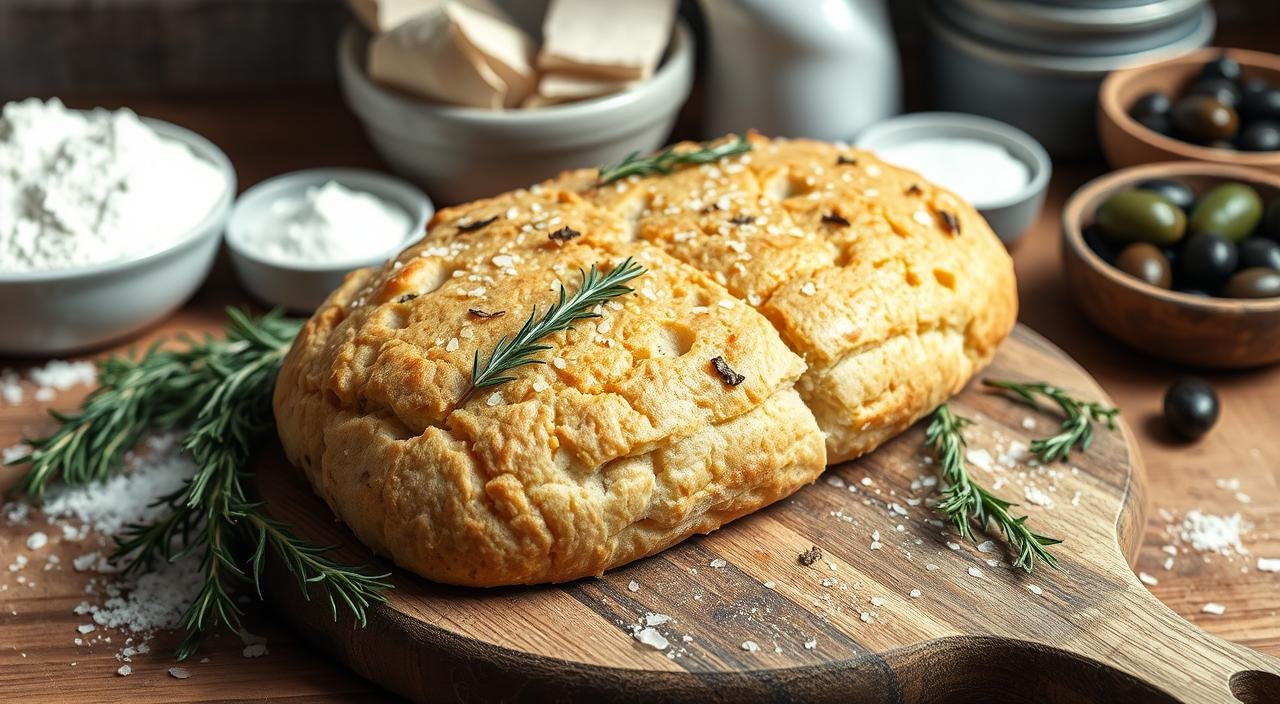
Calling all bread lovers! Get ready to turn your kitchen into an Italian bakery with this amazing rosemary focaccia bread recipe. It’s perfect for both seasoned bakers and kitchen newbies. This homemade focaccia will impress everyone.
Focaccia is more than just bread – it’s a culinary adventure. With a few simple ingredients and some love, you can make a delicious rosemary focaccia bread. This recipe has a 4.8-star rating from 410 reviews, showing its tasty reputation.
Key Takeaways
- Perfect for bakers of all skill levels
- Serves 8-12 people
- Total preparation time around 3 hours
- Simple ingredients create extraordinary flavor
- Versatile bread with endless topping possibilities
The History and Origins of Focaccia
Focaccia is a beloved Italian flatbread with a long history. It connects modern kitchens to ancient traditions. This bread has been a staple for thousands of years.
The history of focaccia goes back to the Etruscans and Ancient Greece. It was first made in North Central Italy and Ancient Greece around 1000 BC. This bread has traveled far, becoming a favorite across the Mediterranean.
Traditional Italian Roots
The Romans were key in shaping focaccia. They called it panis focacius, or “hearth bread.” This name shows its simple beginnings. The recipe was straightforward:
- Rough flour
- Olive oil
- Water
- Minimal yeast
- Salt
Evolution of Focaccia Through Time
Focaccia was a food for workers and peasants. As the Roman Empire grew, it spread to France and Spain. It became a common food in these places.
“Focaccia is more than bread; it’s a historical journey you can taste.”
Regional Variations
Each Italian region has its own focaccia style. This shows how versatile the bread is:
| Region | Characteristic |
|---|---|
| Liguria | Thin, olive oil-rich version |
| Tuscany | Thicker, more rustic style |
| Sicily | Often topped with tomatoes and herbs |
By the early 20th century, immigrants brought focaccia to the Americas. This ensured its popularity and evolution worldwide.
Essential Ingredients for Rosemary Focaccia Bread
Making the perfect rosemary focaccia begins with choosing top-notch ingredients. The success of your bread comes from knowing the key elements that turn simple parts into a delicious dish.
“Great bread begins with great ingredients” – Artisan Baker’s Wisdom
Here are the main ingredients you’ll need for a real rosemary focaccia:
- All-purpose flour (3.5 cups)
- Rapid rise yeast (1 envelope)
- Extra virgin olive oil
- Kosher salt
- Fresh rosemary sprigs
- Warm water
The secret to amazing focaccia is in the quality of your ingredients. Pick a strong extra virgin olive oil with a deep, fruity taste. Fresh rosemary is a must – its scent will make your bread unforgettable.
| Ingredient | Quantity | Purpose |
|---|---|---|
| All-Purpose Flour | 3.5 cups | Provides structure and texture |
| Yeast | 1 envelope | Enables bread rising |
| Olive Oil | 4 tablespoons | Adds richness and flavor |
| Fresh Rosemary | 1 tablespoon | Provides distinctive herb flavor |
Pro tip: Always use fresh, high-quality ingredients. Your focaccia will thank you!
When picking your rosemary bread essentials, remember each ingredient is vital. Flour gives structure, yeast makes it rise, olive oil adds moisture, and fresh rosemary gives it that special aroma that makes focaccia stand out.
The Secret of Perfect Focaccia Dough
Making the perfect focaccia is all about mastering its texture. It’s an art that professional bakers take seriously. They know it’s all about precision and patience.
Mastering Bread Hydration
The key to great focaccia is its hydration. Our recipe uses 72% to 80% hydration. This means 360-400 grams of water for every 500 grams of flour.
This high moisture makes focaccia light and fluffy. It’s what makes it so irresistible.
- Ideal hydration range: 72-80%
- Water quantity: 360-400 grams
- Flour type: Tipo 0 (500 grams)
The Cold Fermentation Technique
Cold fermentation is a game-changer for focaccia. It makes the dough’s flavor and texture better. By chilling the dough for 12-72 hours, flavors develop slowly.
This slow process also makes the dough easier to digest. It’s a patient approach to making great focaccia.
“Great focaccia is not rushed – it’s a patient process of flavor development.”
Gentle Kneading Approach
Focaccia dough needs a gentle touch. Instead of hard kneading, use coil fold techniques. This builds gluten without overworking the dough.
This ensures the focaccia stays light and airy. It’s a delicate process that pays off in the end.
| Technique | Duration | Purpose |
|---|---|---|
| Initial Mix | 10 minutes | Combine ingredients |
| First Coil Fold | 45 minutes | Develop gluten |
| Second Coil Fold | 45 minutes | Strengthen structure |
Creating perfect focaccia is all about understanding dough development. With these tips, you can make restaurant-quality bread at home!
Creating the Signature Herb-Infused Olive Oil
Making the perfect rosemary olive oil is an art. It turns your focaccia from good to amazing. This oil is more than a topping; it’s the key to a better bread experience.
Exploring the world of herb-infused oil is magical. Choosing the right herbs and getting their flavor is key. Woody herbs like rosemary are perfect, releasing oils and creating a strong aroma.
Selecting Your Herbs
- Rosemary: The star of our herb-infused oil
- Thyme: Adds depth and complexity
- Garlic: Provides a robust, savory note
- Sage: Brings an earthy undertone
Temperature is important when making rosemary olive oil. Use low and slow heat. This lets herbs release their flavors without burning.
“The secret of great focaccia lies in the layers of flavor you build, starting with an incredible herb-infused oil.”
Herb Oil Preparation Method
- Choose high-quality extra virgin olive oil
- Wash and pat dry fresh herbs
- Gently warm oil to 180°F
- Add herbs and steep for 30 minutes
- Strain and store in a cool, dark place
| Herb | Flavor Profile | Best Pairing |
|---|---|---|
| Rosemary | Pine-like, aromatic | Focaccia, roasted vegetables |
| Thyme | Earthy, slightly minty | Bread, roasted meats |
| Garlic | Sharp, intense | Almost everything |
Pro tip: Your herb-infused oil can last up to two weeks. It’s a flavor booster for many dishes, not just focaccia.
Step-by-Step Mixing and Proofing Process
Making the perfect focaccia is an art that starts with understanding how dough rises. It’s a journey from simple ingredients to a memorable bread experience. This journey involves careful mixing and precise proofing techniques.
Initial Dough Formation
Your focaccia proofing adventure begins with mixing key ingredients. Start by mixing 2 ½ cups of flour with 2 ¼ teaspoons of instant yeast. Then, add warm water between 110°F to 115°F to activate the yeast perfectly.
- Combine dry ingredients thoroughly
- Use precise water temperature for yeast activation
- Mix until a sticky, shaggy dough forms
First and Second Rise Tips
Bread dough rising needs patience and the right environment. Let your dough rest for about 1 to 1.5 hours at room temperature for the first rise. It’s ready when it doubles in size and becomes puffy.
“Great focaccia is all about giving your dough time to develop flavor and texture.” – Artisan Baker’s Wisdom
Proper Proofing Temperature
Temperature is key in focaccia proofing. Aim for a consistent environment of 70-75°F. For an overnight slow fermentation, refrigerate the dough for 12-48 hours to develop deeper flavors.
| Proofing Stage | Time | Temperature |
|---|---|---|
| First Rise | 1-1.5 hours | Room Temperature (70-75°F) |
| Second Rise | 20-30 minutes | Room Temperature |
| Overnight Fermentation | 12-48 hours | Refrigerator (38-40°F) |
Pro tip: Always cover your dough with a damp cloth to prevent it from drying out during the rising process.
The Art of Dimpling and Shaping
Learning to dimple focaccia turns a simple flatbread into a work of art. Each press of your fingers makes wells for olive oil, herbs, and flavors. Shaping flatbread is not just about looks; it’s about texture and character.
Your journey starts with soft, pillowy dough. The trick is to press with the right amount of force and place your fingers correctly. Here’s how to dimple perfectly:
- Use clean, slightly oiled fingertips
- Press gently but firmly into the dough
- Create evenly spaced indentations
- Aim for depth of about ½ inch
“Dimpling is like giving your focaccia a gentle massage—each press tells a story of flavor and texture.”
Dimpling does more than just look good. It spreads olive oil evenly, adds texture, and lets toppings settle in. Think of each dimple as a tiny flavor reservoir ready to delight your taste buds.
When shaping, feel free to be creative. You can go for traditional rectangular shapes or try round or free-form ones that show off your style.
Pro tip: Let your dimpled dough rest for 20 minutes before baking. This lets the gluten relax and creates those lovely puffy peaks in the oven.
Rosemary Focaccia Bread: Baking Techniques
Turning your dough into a golden, crusty masterpiece needs precision and passion. Learning focaccia baking tips can make your bread truly special.
Baking focaccia is an art that needs attention to detail. Your perfect bread crust comes from knowing key techniques. These will make your kitchen smell like an authentic Italian bakery.
Optimal Oven Temperature
Professional bakers know temperature is key for spectacular focaccia. Aim for a hot oven between 430°F and 450°F. This heat creates a dreamy crisp exterior and soft interior.
The high heat also makes those golden-brown edges that make focaccia irresistible.
Achieving the Perfect Crust
- Use extra-virgin olive oil generously on the baking sheet
- Sprinkle coarse sea salt before baking for enhanced flavor
- Create deep dimples to capture olive oil and prevent uneven rising
Visual Doneness Indicators
Knowing when your focaccia is perfectly baked requires keen observation. Look for these key signs:
- Golden-brown color across the entire surface
- Crisp edges that pull slightly away from the baking sheet
- A hollow sound when tapping the bottom of the bread
“The magic of focaccia lies in its simplicity and the baker’s intuition.” – Italian Baking Tradition
Typically, your rosemary focaccia will need 15-20 minutes in the oven. Remember, every oven is unique. So, keep a watchful eye during the final minutes of baking to prevent overcooking.
Storing and Serving Suggestions
Your freshly baked rosemary focaccia needs some care after it cools down. Storing focaccia is easy, but a few tips can make it even better.
Focaccia is super versatile when it comes to serving. You can cut it for sandwiches, use it as a side, or pair it with dips and spreads.
Storage Guidelines
- Room temperature storage: Keep in an airtight container for up to 2 days
- Refrigerator storage: Sealed container preserves freshness for up to 1 week
- Freezer storage: Wrap tightly and store for up to 1 month
Reheating Techniques
- Preheat oven to 350°F
- Wrap focaccia in aluminum foil
- Warm for 5-10 minutes until heated through
“The secret to great focaccia is not just in baking, but in how you preserve its delightful texture and flavor!” – Artisan Baker
| Storage Method | Duration | Recommended Technique |
|---|---|---|
| Counter | 2 days | Airtight container |
| Refrigerator | 1 week | Sealed plastic bag |
| Freezer | 1 month | Wrapped in foil |
Pro tip: Always let your focaccia cool completely before storing to prevent moisture buildup. Serving bread at room temperature brings out its most vibrant flavors!
Troubleshooting Common Focaccia Issues
Bread troubleshooting is key for home bakers. Focaccia can be tricky, but with the right knowledge, you can solve most problems. Let’s look at common issues and their fixes.
Fixing focaccia problems starts with knowing common issues. Whether it’s texture, rising, or baking problems, there’s usually a solution.
Resolving Texture Troubles
Texture issues can ruin your focaccia. Here are some fixes:
- Dense Bread: Often caused by not proofing enough or overworking the dough
- Low protein flour can lead to weak gluten structure
- Ensure proper hydration – aim for a 1½ cups water to 4 cups flour ratio
Conquering Rising Challenges
Yeast can be tricky. If your dough won’t rise, try these solutions:
- Check yeast freshness – old yeast won’t activate properly
- Maintain warm proofing temperatures (around 75-80°F)
- Use the right yeast quantity – typically 0.02% to 0.05% for flatbreads
Baking Correction Techniques
“Perfect focaccia is about understanding your dough and making small, strategic adjustments.”
Baking problems can be frustrating, but they’re often easy to fix. Key strategies include:
- Preheat your oven to 425°F for optimal baking
- Use a 12×16 inch baking sheet for even heat distribution
- Dimple the dough to prevent uneven rising and burning
- Apply 2 tablespoons of olive oil to prevent sticking
With these tips, you’ll be fixing focaccia problems like a pro. Remember, every baking challenge is a chance to learn and get better!
Conclusion
Making your own Italian flatbread is more than a fun cooking project. It opens the door to the art of bread making. Our journey into homemade focaccia bread has shown how simple ingredients can become a delicious treat.
You’ve learned the importance of ingredient balance and mastering the proofing process. Making focaccia is all about patience, passion, and practice. With just a few ingredients like olive oil, rosemary, and flour, you can make a dish that wows everyone.
Every loaf of focaccia bread has a story behind it. Your bread will show your unique touch, whether it’s through different herbs, olive oil amounts, or dimpling techniques. The key ingredient is your enthusiasm and eagerness to learn.
Keep trying new things and enjoying the process of baking. Your skills will grow with each focaccia you make. Soon, making Italian flatbread will become a beloved tradition in your home.
FAQ
What makes focaccia different from other breads?
Focaccia is a special Italian flatbread. It has a dough that’s very wet and a surface with dimples. It’s also covered in olive oil, herbs, salt, and olive oil. This makes it crispy outside and soft inside, unlike other breads.
How long does it take to make rosemary focaccia from start to finish?
Making rosemary focaccia takes 3-4 hours. This includes prep, rising, and baking. Cold fermentation can make it even better, taking it to overnight. Most of this time, you just let the dough rest.
Can I make focaccia without fresh rosemary?
Yes, you can! While fresh rosemary is common, you can try thyme, oregano, or basil. Dried herbs are okay too, but they give a stronger flavor. Choose herbs that go well with olive oil and the bread’s taste.
How do I store homemade focaccia?
Keep your focaccia at room temperature, wrapped in a towel or in a container for 2-3 days. Freeze it for up to a month if you want to keep it longer. To make it crispy again, warm it in the oven.
Why are the dimples important in focaccia?
Dimples are key for focaccia. They trap olive oil and herbs, help the bread rise, and make it crispy outside and soft inside. They’re what make focaccia special.
Is focaccia difficult to make for beginners?
No, focaccia is easy for beginners! Its dough is forgiving, and making dimples is simple. With a bit of practice, anyone can make delicious focaccia.
Can I add other toppings to my focaccia?
Yes! While rosemary is traditional, you can try cherry tomatoes, olives, or caramelized onions. Just don’t overload it to keep it light and airy.
What’s the best way to serve focaccia?
Focaccia is very versatile. Enjoy it warm as a side, in sandwiches, or with olive oil. It’s great with soups and salads too. It’s perfect on its own or with other dishes.