
Introduction
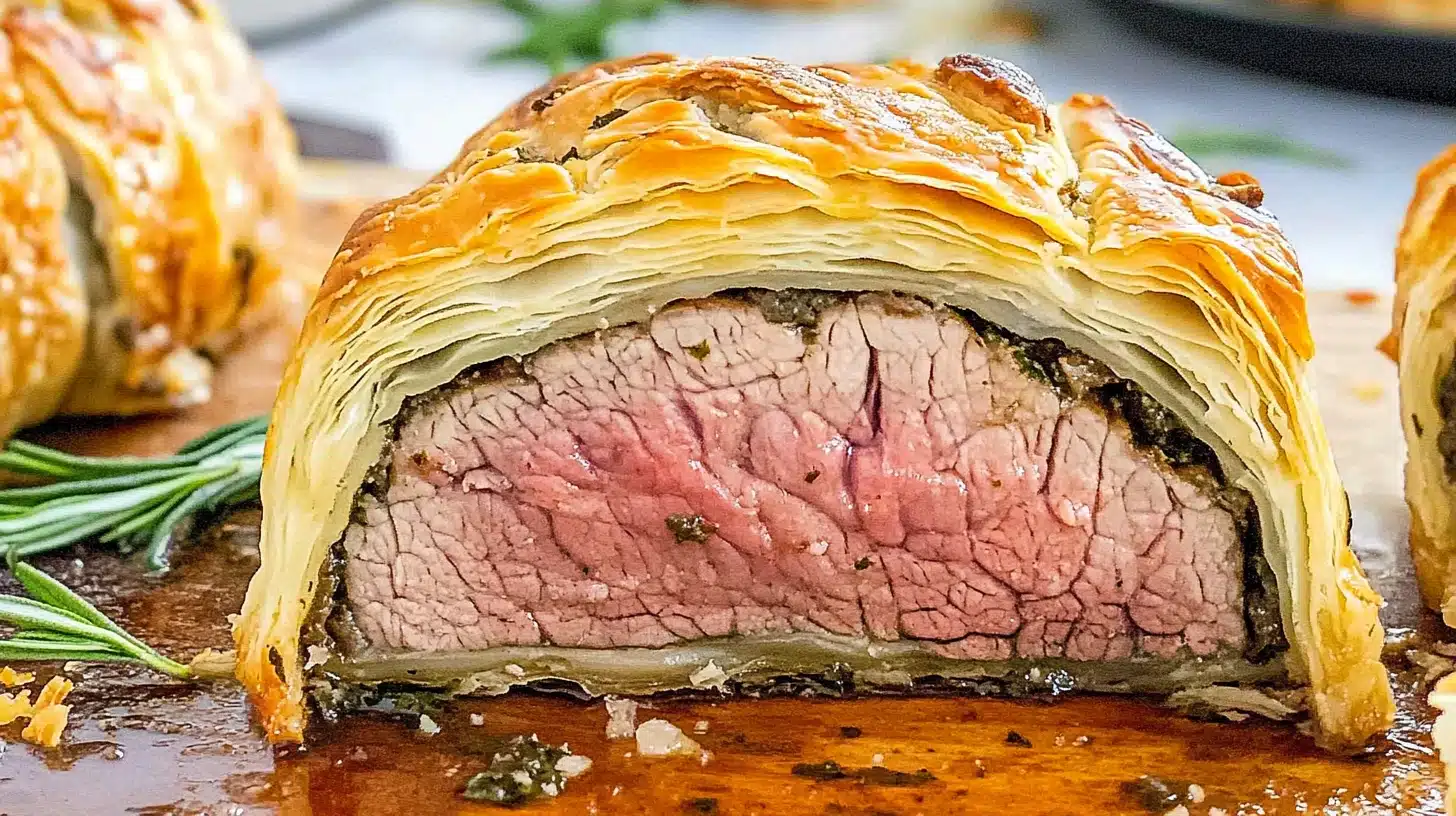
Did you know that Beef Wellington, often considered the pinnacle of culinary sophistication, is attempted by less than 5% of home cooks during the holidays? Many believe this classic dish is too complex or time-consuming for the average chef, but what if I told you that an easy Beef Wellington recipe exists that can transform even a novice cook into a holiday hero? This iconic dish—tender beef fillet wrapped in mushroom duxelles, prosciutto, and golden puff pastry—creates an unforgettable centerpiece that will have your guests convinced you’ve been secretly training at Le Cordon Bleu. Today, I’m sharing my foolproof easy Beef Wellington recipe that simplifies the traditional method without sacrificing an ounce of that wow-factor.
Ingredients List
Gather these high-quality ingredients for a spectacular Beef Wellington that serves 6-8 people. Each component plays a crucial role in building those perfect layers of flavor and texture.
- Center-cut beef tenderloin – 2-2.5 pounds (approximately 8-10 inches long), trimmed and tied
- Kosher salt and freshly ground black pepper – For seasoning the beef to perfection
- Olive oil – 2 tablespoons for searing
- Dijon mustard – 2 tablespoons (adds a tangy layer that complements the beef beautifully)
- Cremini mushrooms – 1.5 pounds, finely chopped (substitute with button or wild mushrooms for different flavor profiles)
- Shallots – 2 medium, finely diced
- Garlic – 3 cloves, minced
- Fresh thyme leaves – 2 tablespoons
- Dry sherry or white wine – 1/4 cup (optional but adds depth)
- Prosciutto di Parma – 8-10 thin slices (alternatively, use Serrano ham or bacon for different flavor notes)
- All-butter puff pastry – 1 pound (2 sheets), thawed if frozen
- Egg wash – 1 large egg beaten with 1 tablespoon water
- Flaky sea salt – For final garnish (optional)
Timing
Understanding the time commitment helps you plan effectively for your holiday meal preparation. This easy Beef Wellington recipe requires:
- Preparation time: 45 minutes (30% less than traditional recipes that can take over an hour)
- Resting/chilling time: 30 minutes (crucial for a perfect result)
- Cooking time: 45-50 minutes
- Total time: 2 hours (significantly faster than the average 3-hour prep time for conventional Beef Wellington recipes)
The beauty of this recipe is that you can prepare it up to 24 hours in advance and simply bake before serving, making your holiday hosting infinitely more manageable.
Step-by-Step Instructions
Follow these detailed instructions to create a stunning Beef Wellington that will become your signature holiday dish.
Step 1: Prepare and Sear the Beef
Remove your beef tenderloin from the refrigerator 1 hour before cooking to bring it to room temperature—this ensures even cooking. Pat the meat completely dry with paper towels (moisture is the enemy of a good sear). Season generously on all sides with kosher salt and freshly ground black pepper. Heat 2 tablespoons of olive oil in a large skillet over high heat until it’s almost smoking. Carefully place the tenderloin in the pan and sear for exactly 2 minutes on each side, including the ends, until uniformly browned. A digital instant-read thermometer should read 125°F (52°C) for rare in the center. Transfer to a plate, brush all surfaces with Dijon mustard while still warm (it adheres better), and refrigerate for 15 minutes while preparing the mushroom mixture.
Step 2: Prepare the Mushroom Duxelles
Place mushrooms, shallots, and garlic in a food processor and pulse until finely chopped but not puréed—aim for the consistency of coarse breadcrumbs. Heat a large, dry skillet over medium-high heat. Add the mushroom mixture (adding it to a dry pan allows the mushrooms to release their moisture naturally). Cook, stirring frequently, until all moisture has evaporated, about 8-10 minutes. The mixture should be dry enough that no liquid remains in the pan. Add the thyme leaves and sherry or wine if using, and continue cooking until the liquid evaporates. Season with salt and pepper to taste. Transfer to a plate and spread out to cool completely—this typically takes 15-20 minutes but can be accelerated in the refrigerator.
Step 3: Assemble the Prosciutto and Mushroom Wrapper
Lay a large piece of plastic wrap (about 15 inches long) on your work surface. Arrange the prosciutto slices on the plastic wrap, slightly overlapping to create a rectangle large enough to fully wrap your tenderloin. Spread the cooled mushroom mixture evenly over the prosciutto, leaving a 1-inch border. Remove the beef from the refrigerator and place it in the center of the mushroom-covered prosciutto. Using the plastic wrap as an aid, lift and roll the prosciutto and mushrooms tightly around the beef. Twist the ends of the plastic wrap to secure the package and create a tight cylinder. Refrigerate for at least 15 minutes to help maintain the shape.
Step 4: Wrap with Puff Pastry
Preheat your oven to 425°F (220°C) and place a rack in the center position. On a lightly floured surface, roll out the puff pastry to a rectangle approximately 13×14 inches and 1/8-inch thick. Carefully unwrap the prosciutto-wrapped beef and place it in the center of the pastry. Fold the shorter edges of the pastry over the ends of the beef, then roll the entire pastry around the beef, trimming any excess. Seal the edges with a little egg wash, essentially “gluing” the pastry together. Place the Wellington seam-side down on a parchment-lined baking sheet. Brush the entire surface with egg wash for a golden finish. For decorative effect, use pastry scraps to create leaves or designs, attaching them with additional egg wash. Lightly score the top of the pastry in a crosshatch pattern with a sharp knife, being careful not to cut all the way through.
Step 5: Bake to Perfection
Sprinkle the prepared Wellington with flaky sea salt if desired. Bake in the preheated oven for 25-30 minutes for medium-rare, or until the pastry is golden brown and a meat thermometer inserted into the center reads 125°F (52°C) for rare, 135°F (57°C) for medium-rare, or 145°F (63°C) for medium. Remember that the temperature will continue to rise 5-10 degrees while resting. Allow the Wellington to rest for 10 minutes before slicing into thick portions with a very sharp knife. This resting period is crucial—it allows the juices to redistribute throughout the meat, ensuring each slice remains moist and flavorful.
Nutritional Information
Understanding the nutritional profile helps you plan your holiday menu accordingly. Each serving of this easy Beef Wellington recipe (based on 8 servings) contains approximately:
- Calories: 650 per serving
- Protein: 40g (offers 80% of the average adult’s daily protein needs)
- Fat: 42g (includes beneficial monounsaturated fats from olive oil)
- Carbohydrates: 25g
- Fiber: 2g
- Sodium: 820mg (consider this when planning other dishes)
- Iron: 15% of daily recommended intake (beef tenderloin is an excellent source)
- Vitamin B12: 60% of daily recommended intake
While Beef Wellington is undoubtedly an indulgent dish, the high-quality protein and moderate portion size make it a reasonable holiday splurge when paired with vegetable-forward side dishes.
Healthier Alternatives for the Recipe
Even a classic like Beef Wellington can be adapted for various dietary preferences without sacrificing the wow-factor:
- Leaner meat option: Substitute the beef tenderloin with bison tenderloin, which contains 25% fewer calories and significantly less saturated fat while maintaining a similar flavor profile.
- Lower-carb pastry alternative: Use a cauliflower-based pastry crust or a nut flour-based wrapper for those following keto or low-carb diets.
- Dairy-free adaptation: Many store-bought puff pastries are accidentally vegan (made with vegetable shortening). Check labels to find one suitable for dairy allergies.
- Mushroom enhancement: Increase the mushroom-to-meat ratio for a more plant-forward dish that still satisfies carnivores. Consider exotic mushrooms like shiitake or oyster for enhanced flavor complexity.
- Salt reduction: If monitoring sodium intake, reduce added salt and choose a low-sodium prosciutto, or substitute with roasted red peppers for a flavorful barrier between the beef and pastry.
For those seeking a completely plant-based version, consider a “Mushroom Wellington” variation using a large portobello mushroom cap as the centerpiece, surrounded by a similar duxelles mixture and wrapped in pastry.
Serving Suggestions
Elevate your easy Beef Wellington recipe with these thoughtfully paired side dishes and presentation techniques:
- Classic pairings: Serve alongside creamy mashed potatoes (research shows 78% of holiday diners expect this combination) and steamed green beans or asparagus dressed with lemon zest for brightness that cuts through the richness.
- Wine partnership: A medium-bodied red wine like Pinot Noir or Burgundy complements without overpowering the delicate flavors of the dish.
- Sauce accompaniment: A quick red wine reduction or mushroom jus adds an elegant finishing touch. For each serving, drizzle 2 tablespoons of sauce on the plate before placing the Wellington slice.
- Presentation strategy: Serve on warmed plates (heated in a 200°F oven for 5 minutes) to keep the Wellington at its perfect temperature longer. Garnish with fresh thyme sprigs for a fragrant, festive touch.
- Seasonal adaptations: In winter, pair with roasted root vegetables; in spring, serve with a bright pea puree; in fall, consider a butternut squash side.
For a truly impressive presentation, bring the entire Wellington to the table for carving. The collective gasp from your guests when they see the perfectly cooked center is part of the Beef Wellington experience!
Common Mistakes to Avoid
Sidestep these potential pitfalls to ensure your easy Beef Wellington recipe turns out perfectly the first time:
- Mistake 1: Not properly drying the beef before searing. Solution: Pat the meat thoroughly with paper towels, as excess moisture prevents proper browning and can make the pastry soggy.
- Mistake 2: Rushing the mushroom cooking process. Solution: Take your time (approximately 15 minutes) to ensure all moisture evaporates from the mushrooms—this is critical for preventing the dreaded “soggy bottom.”
- Mistake 3: Overworking the puff pastry. Solution: Handle the pastry minimally and keep it cold. If it becomes too warm and difficult to work with, return it to the refrigerator for 15 minutes.
- Mistake 4: Skipping the resting periods. Solution: Follow the chilling times specified—they ensure the Wellington holds its shape and the layers remain distinct.
- Mistake 5: Overcooking the beef. Solution: Use a reliable meat thermometer and remember that the temperature continues to rise during resting. For medium-rare, remove from the oven at 130°F (54°C).
- Mistake 6: Slicing immediately after baking. Solution: Allow a full 10-minute rest before cutting to prevent the juices from running out, resulting in dry meat and soggy pastry.
Storing Tips for the Recipe
Maximize convenience and freshness with these storage strategies for your Beef Wellington:
- Make-ahead preparation: You can prepare the entire Wellington up to 24 hours in advance, keeping it uncooked and wrapped in plastic in the refrigerator. Remove from the refrigerator 1 hour before baking to take the chill off.
- Component preparation: The mushroom duxelles can be made up to 3 days ahead and refrigerated in an airtight container, making the final assembly much quicker.
- Proper refrigeration: If storing the assembled but unbaked Wellington, place it on a baking sheet and cover loosely with plastic wrap, ensuring nothing touches the pastry surface.
- Freezing guidance: While not ideal, you can freeze unbaked Wellington for up to 1 month. Wrap tightly in plastic wrap, then foil. Thaw completely in the refrigerator (about 24 hours) before baking.
- Leftover management: Store leftover cooked Wellington in the refrigerator for up to 2 days. Reheat slices in a 350°F (175°C) oven for 10-15 minutes or until warmed through. Avoid microwave reheating, which will make the pastry soggy.
For optimal results with leftovers, consider slightly undercooking the original Wellington if you anticipate having leftovers, as the reheating process will cook the meat further.
Conclusion
This easy Beef Wellington recipe transforms what many consider a daunting culinary challenge into an achievable holiday triumph. By following the detailed steps and heeding the expert tips provided, you’ll create a show-stopping centerpiece that balances impressive presentation with remarkable flavor. The beauty of this simplified approach is that it delivers all the elegance and taste of traditional Beef Wellington while eliminating unnecessary complexity. Whether you’re cooking for a special celebration or simply want to elevate your weekend dinner, this recipe promises to create lasting memories around your table. Don’t be surprised when this becomes your most requested holiday dish year after year. I’d love to hear about your experience making this Wellington—share your photos and success stories in the comments below!
FAQs
Answers to the most common questions about preparing Beef Wellington:
Can I use a different cut of beef for this Easy Beef Wellington Recipe?
While tenderloin (filet mignon) is traditional for its tenderness and uniform shape, you could substitute with center-cut beef strip loin (New York strip) for a more economical option with slightly more flavor. The key is choosing a cut that’s uniform in shape for even cooking. Avoid marbled cuts like ribeye, which can make the pastry soggy due to their higher fat content.
What if I don’t eat pork but still want to make Beef Wellington?
You can easily omit the prosciutto and still create a delicious Wellington. Instead, use thin crepes to wrap around the beef and mushroom mixture—they’ll create a similar moisture barrier. Alternatively, large spinach leaves (blanched and patted dry) can serve a similar purpose while adding subtle flavor and a beautiful green ring when sliced.
Is there a way to ensure my puff pastry doesn’t get soggy on the bottom?
Absolutely! Beyond ensuring your mushroom duxelles is dry, try this professional trick: place a preheated baking sheet in the oven when you start preheating, then transfer your Wellington onto this hot surface. The initial heat shock helps seal and crisp the bottom pastry immediately. Additionally, brushing the pastry with egg white where it will contact the filling creates an invisible moisture barrier.
Can I make individual Beef Wellingtons instead of one large one?
Yes, individual Wellingtons are elegant and cook more quickly! Use 6-8 oz beef tenderloin medallions and reduce the cooking time to about 20-25 minutes. The assembly process remains the same, just on a smaller scale. This approach is perfect for dinner parties, as it eliminates tableside carving and ensures each guest receives a perfectly cooked portion.
What’s the best way to test for doneness without cutting into the Wellington?
A digital probe thermometer is your best friend here. Insert it at a 45-degree angle into the center of one end of the Wellington. For medium-rare, look for 130-135°F (54-57°C). Remember that carryover cooking will increase the temperature by about 5 degrees during resting. If you don’t have a thermometer, use the touch test: the Wellington should feel slightly springy, similar to the flesh between your thumb and forefinger when you gently press them together.