
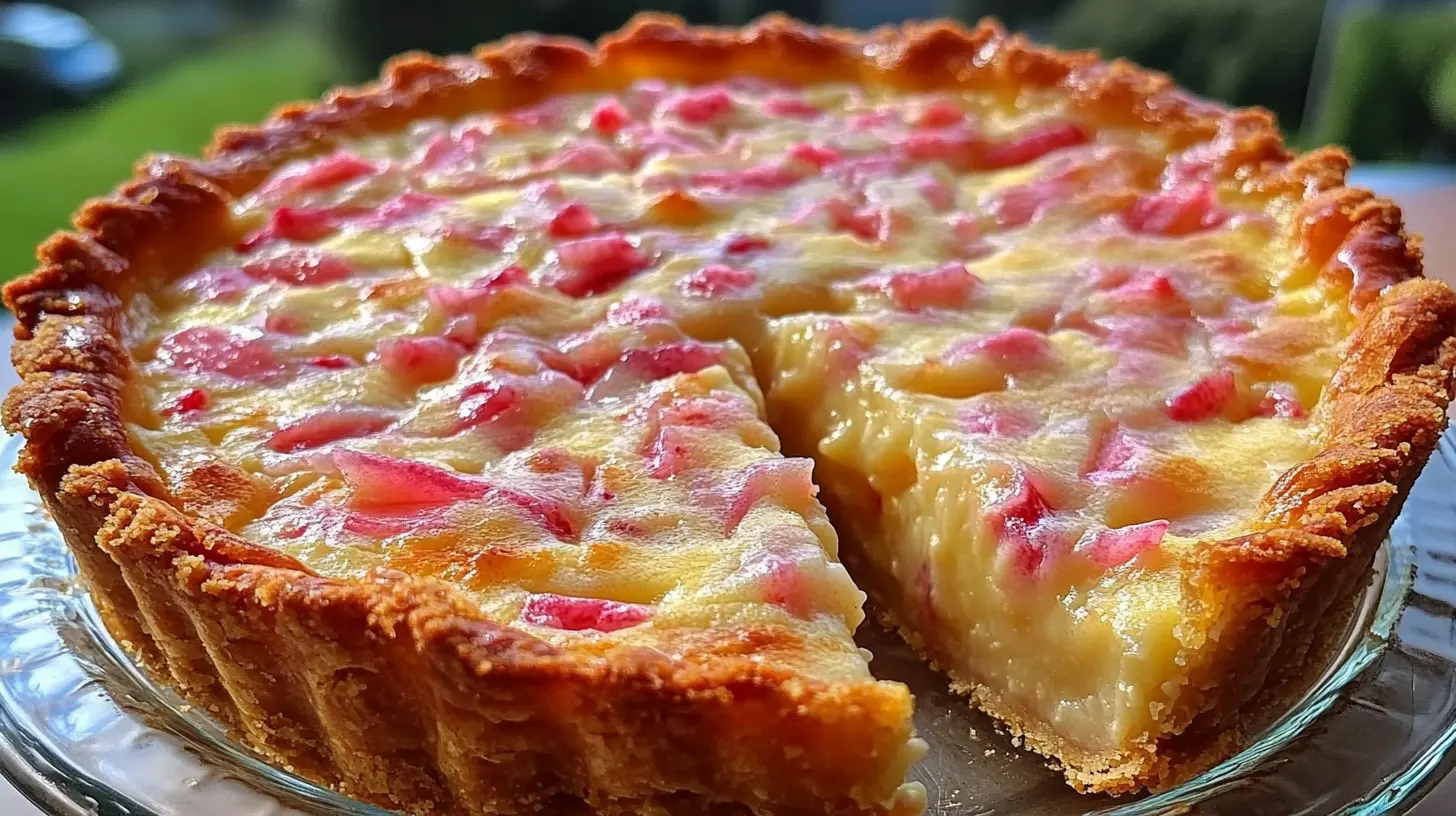
Introduction
Did you know that eliminating the crust from a traditional pie can reduce calorie content by up to 30%? If you’re craving a dessert that perfectly balances tangy and sweet flavors without the extra carbs, a crustless rhubarb custard pie recipe might be your new culinary obsession. This delightful dish transforms the often-underappreciated rhubarb into a silky, custardy masterpiece that literally melts in your mouth. Whether you’re a seasoned baker or a kitchen novice, this crustless rhubarb custard pie offers an approachable yet impressive dessert option that’s sure to become a springtime favorite in your household.
Ingredients List
Gather these simple yet transformative ingredients to create your crustless rhubarb custard pie. Each component plays a crucial role in achieving that perfect balance between tart rhubarb and creamy custard.
- 4 cups fresh rhubarb, chopped into ½-inch pieces (frozen works too, just thaw and drain excess liquid)
- 1½ cups granulated sugar (can substitute with 1 cup coconut sugar for a lower glycemic option)
- 4 large eggs, room temperature
- ¼ cup all-purpose flour (or gluten-free 1:1 baking flour for a gluten-free version)
- 1 cup heavy cream (coconut cream makes an excellent dairy-free alternative)
- 1 teaspoon pure vanilla extract
- ¼ teaspoon salt
- ¼ teaspoon ground nutmeg
- 1 tablespoon butter, melted (or coconut oil)
- Optional: 1 tablespoon lemon zest for enhanced brightness
Timing
Understanding the timing helps you plan your baking session efficiently. This crustless rhubarb custard pie recipe takes less time than traditional pies, with approximately 15 minutes of preparation and 45-50 minutes of baking. The total time of about 65 minutes is roughly 25% faster than making a traditional pie with crust. Plus, you’ll need an additional 2 hours for cooling, which is essential for the custard to set properly. Plan accordingly, as this dessert is best made several hours before serving.
Step-by-Step Instructions
Follow these detailed steps to create a perfect crustless rhubarb custard pie that will impress your family and friends with its velvety texture and balanced flavors.
Step 1: Prepare Your Oven and Pan
Preheat your oven to 350°F (175°C). Generously grease a 9-inch pie plate or baking dish with butter or cooking spray. For extra insurance against sticking, consider lining the bottom with parchment paper, especially if your baking dish doesn’t have a non-stick coating. This preparation step is crucial as without a crust, the custard can adhere to the dish during baking.
Step 2: Prepare the Rhubarb
Wash the rhubarb stalks thoroughly and trim away any leaves (remember, rhubarb leaves contain oxalic acid and are toxic). Cut the stalks into approximately ½-inch pieces. If you’re using particularly thick stalks, consider slicing them lengthwise first before chopping. Spread the chopped rhubarb evenly in the prepared pie plate. If using frozen rhubarb, ensure it’s completely thawed and pat it dry with paper towels to remove excess moisture that could make your custard watery.
Step 3: Create the Custard Base
In a medium bowl, whisk together the eggs until they’re light and frothy, about 1-2 minutes. This aeration helps create a lighter custard texture. Add the sugar gradually while continuing to whisk, ensuring it dissolves properly for a smooth, non-grainy custard. Sprinkle in the flour and salt, whisking gently until completely incorporated with no visible lumps. The flour acts as a subtle thickening agent for your custard.
Step 4: Enrich the Custard
Slowly pour in the heavy cream while whisking continuously to maintain the smooth texture. Add the vanilla extract, nutmeg, and lemon zest (if using). Finally, incorporate the melted butter. The resulting mixture should be silky smooth with a pale yellow color. Take a moment to taste a tiny amount and adjust sweetness if necessary, keeping in mind that the rhubarb will add considerable tartness to the final dish.
Step 5: Combine and Bake
Pour the custard mixture evenly over the rhubarb in the pie plate. Use a fork to gently stir just the surface, ensuring the rhubarb and custard are well integrated without disturbing the entire arrangement. This helps prevent the rhubarb from floating to the top during baking. Place the pie on the middle rack of your preheated oven and bake for 45-50 minutes, or until the center is just set with a slight wobble when gently shaken. The top should be golden brown, and a knife inserted about 1 inch from the edge should come out clean.
Step 6: Cool and Set
Remove the pie from the oven and place it on a wire rack to cool completely, about 2 hours at room temperature. The custard will continue to set as it cools, so resist the temptation to cut into it too soon. For the best texture and flavor, refrigerate the cooled pie for at least 1 hour before serving. This chilling time allows the flavors to meld beautifully and creates that signature melt-in-your-mouth consistency that makes this crustless rhubarb custard pie so irresistible.
Nutritional Information
Understanding the nutritional profile of your crustless rhubarb custard pie helps you make informed dietary choices. Each serving (1/8 of the pie) contains approximately:
- Calories: 275 (about 35% fewer than traditional crusted rhubarb pie)
- Fat: 14g (Saturated Fat: 8g)
- Carbohydrates: 34g
- Dietary Fiber: 1.5g
- Protein: 4g
- Calcium: 8% of Daily Value
- Vitamin C: 6% of Daily Value (from rhubarb)
- Vitamin K: 10% of Daily Value (from rhubarb)
Rhubarb itself is notably low in calories while being rich in antioxidants, vitamin K, and calcium. The crustless version significantly reduces the overall carbohydrate content compared to traditional pies, making it a lighter option for those monitoring carb intake.
Healthier Alternatives for the Recipe
Transform this crustless rhubarb custard pie recipe into an even healthier treat with these thoughtful substitutions that maintain the dessert’s delicious essence:
- Sugar Reduction: Decrease sugar to 1 cup and add 2 tablespoons of honey for natural sweetness. Studies show this can reduce the glycemic impact by up to 25% while maintaining satisfying sweetness.
- Dairy Alternatives: Replace heavy cream with equal parts unsweetened almond milk mixed with 2 tablespoons of cornstarch for thickness. This swap reduces fat content by approximately 70%.
- Egg Modification: Use 2 whole eggs plus 4 egg whites instead of 4 whole eggs to reduce cholesterol while maintaining the custard’s structure.
- Flavor Enhancers: Add 1 teaspoon of cinnamon or cardamom to intensify flavor perception, allowing for further sugar reduction.
- Fruit Boost: Mix in 1 cup of strawberries with the rhubarb to add natural sweetness and increase vitamin C content by approximately 35%.
Serving Suggestions
Elevate your crustless rhubarb custard pie experience with these inspired serving ideas that complement its unique texture and flavor profile:
- Classic Accompaniments: A small dollop of lightly sweetened whipped cream or a scoop of vanilla bean ice cream provides delightful temperature and texture contrast.
- Herbal Infusions: Try garnishing with fresh mint leaves or a sprinkle of finely chopped basil for an unexpected aromatic dimension that cuts through the richness.
- Crunchy Elements: A light sprinkle of toasted almond slivers or homemade granola adds textural interest that the missing crust would typically provide.
- Sauce Pairings: A drizzle of warm caramel sauce or raspberry coulis creates a stunning visual presentation and flavor enhancement.
- Beverage Companions: Serve alongside Earl Grey tea, coffee with cinnamon, or a small glass of dessert wine like Moscato d’Asti for a complete dessert experience.
For brunch gatherings, consider serving smaller portions as part of a dessert trio alongside fresh fruit and miniature scones for an impressive spread that allows guests to sample various flavors.
Common Mistakes to Avoid
Even experienced bakers can encounter challenges with this crustless rhubarb custard pie recipe. Here are the most common pitfalls and how to avoid them:
- Mistake 1: Using rhubarb with excess moisture. Solution: Always thoroughly pat dry thawed frozen rhubarb, as excess water dilutes the custard and prevents proper setting.
- Mistake 2: Overbaking the custard. Solution: Remove the pie when the center still has a slight wobble—about 170°F on an instant-read thermometer. The residual heat will complete the cooking process without curdling the eggs.
- Mistake 3: Not allowing adequate cooling time. Solution: Give your pie at least 2 hours to cool completely before refrigerating or serving, as the custard needs this time to properly set its structure.
- Mistake 4: Uneven rhubarb pieces. Solution: Cut rhubarb into uniform pieces to ensure even cooking throughout the pie. Pieces that are too large remain tough, while too-small pieces dissolve completely.
- Mistake 5: Using cold eggs in the custard. Solution: Always bring eggs to room temperature before incorporating them into the custard base for the smoothest texture and proper emulsification.
- Mistake 6: Skipping the greasing step. Solution: Without a crust as a barrier, thorough greasing of the baking dish is essential to prevent sticking and serve beautiful slices.
Storing Tips for the Recipe
Proper storage ensures your crustless rhubarb custard pie maintains its delightful texture and flavor for as long as possible:
- Refrigeration: Cover the cooled pie with plastic wrap or transfer to an airtight container and refrigerate for up to 3 days. The custard texture actually improves after the first 24 hours as flavors meld.
- Freezing Option: While custard pies typically don’t freeze well, this recipe can be frozen for up to 1 month if properly wrapped. First, freeze uncovered until solid, then wrap tightly in plastic wrap followed by aluminum foil. Thaw overnight in the refrigerator before serving.
- Reheating: To restore the just-baked warmth, heat individual slices for 15-20 seconds in the microwave or place the whole pie in a 300°F oven for 10 minutes.
- Make-Ahead Tips: Prepare the rhubarb and custard mixture separately up to 24 hours in advance, storing both covered in the refrigerator. Combine and bake when ready.
- Quality Indicators: If you notice any watery separation or sour smell, the pie has passed its prime and should be discarded.
Conclusion
This crustless rhubarb custard pie recipe proves that sometimes less truly is more. By eliminating the traditional crust, you’ve created a dessert that highlights the star ingredients—tangy rhubarb and velvety custard—in their purest form. The result is a lighter, more elegant take on a classic dessert that’s both easier to make and potentially healthier to enjoy. Whether you’re serving this at a spring gathering, as a Mother’s Day treat, or simply as a weeknight indulgence, this custard pie delivers sophisticated flavor without complicated techniques. We’d love to hear how your pie turned out—share your baking experience in the comments below, or tag us in your dessert photos on social media! And if you enjoyed this crustless approach, explore our collection of other crust-free desserts that put fruit and flavor front and center.
FAQs
Common questions about making the perfect crustless rhubarb custard pie:
Can I use frozen rhubarb for this crustless rhubarb custard pie?
Yes, frozen rhubarb works perfectly in this recipe. The key is to thoroughly thaw it first and drain any excess liquid, possibly using paper towels to pat it dry. This prevents your custard from becoming watery. Some bakers actually prefer frozen rhubarb as it’s already been prepped and is available year-round.
Why is my custard not setting properly?
Several factors can affect setting: underbaking (the center should reach about 170°F), using extra-large eggs (which add too much liquid), or not allowing sufficient cooling time. Another common cause is excess moisture from the rhubarb. Ensure you’re baking until the edges are set with just a slight wobble in the center, then allow a full 2 hours of cooling at room temperature.
Can I make this recipe dairy-free?
Absolutely! Replace the heavy cream with full-fat coconut milk or coconut cream for the richest texture. For the butter, use coconut oil or a plant-based butter alternative. These substitutions maintain the creamy mouthfeel while making the recipe suitable for dairy-free diets. The coconut flavor pairs surprisingly well with rhubarb’s tanginess.
Is it normal for the rhubarb to float to the top during baking?
Some floating is normal, but excessive separation usually indicates the custard mixture wasn’t properly integrated or the rhubarb pieces are too large. To minimize this effect, gently stir the surface after pouring the custard over the rhubarb, and consider cutting rhubarb into smaller pieces (about ½-inch) which are less likely to float.
Can I reduce the sugar in this recipe?
While rhubarb is naturally very tart and requires some sweetening, you can reduce the sugar to 1 cup without significantly affecting the texture. For further reduction, consider adding 2-3 tablespoons of honey or maple syrup alongside 3/4 cup of sugar, which provides sweetness with less total sugar content. You could also mix sweeter fruits like strawberries with the rhubarb to naturally balance the tartness.