
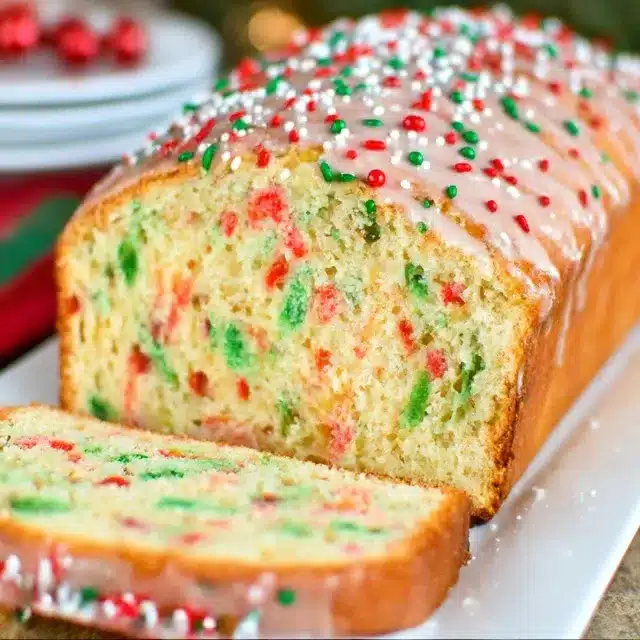
It’s that time of year again when the air is crisp, the lights are twinkling, and the smell of freshly baked Christmas bread fills the house. Growing up, my grandma would make this special loaf every single Christmas Eve, and the aroma would waft through the entire neighborhood, drawing in all the neighbors. As soon as I’d hear the timer ding, I’d come running into the kitchen, eager to get the first warm slice slathered in creamy butter. There was something so comforting and nostalgic about that perfect balance of sweet and savory, complemented by the crunchy, golden crust. It was a tradition that brought our whole family together, and I wouldn’t have it any other way.
Why This Christmas Bread Recipe Will Become Your Go-To
This Christmas Bread is truly a labor of love, but the end result is so worth it. The secret lies in the perfect blend of spices, the soft and pillowy texture, and the beautiful presentation that’ll have your guests ooh-ing and ahh-ing. Once you try this recipe, it’ll become your new holiday staple – trust me!
The Secret Behind Perfect Christmas Bread
The key to nailing this Christmas Bread is all in the kneading and the proofing. You want to knead the dough until it’s silky smooth and elastic, which takes a bit of elbow grease but makes all the difference in the final texture. And the two-rise proofing process is what gives this bread its incredible height and light, airy interior. Follow the instructions closely, and you’ll end up with a showstopping loaf that’ll be the talk of your Christmas feast.
Essential Ingredients You’ll Need
- Warm water – This helps activate the yeast and gets the dough rising.
- Active dry yeast – The leavening agent that makes the bread rise.
- Sugar – Just a touch of sweetness to balance out the savory flavors.
- Unsalted butter – Adds richness and a tender crumb.
- Eggs – Provides structure and a soft, pillowy texture.
- All-purpose flour – The base of the bread dough.
- Salt – Enhances all the other flavors.
- Cinnamon – Gives the Christmas Bread its signature holiday spice.
- Nutmeg – Adds warmth and a hint of sweetness.
Step-by-Step Christmas Bread Instructions
Preparing Your Christmas Bread
Making Christmas Bread takes a bit of time and effort, but trust me, it’s so worth it. From start to finish, you’re looking at about 2-3 hours of total prep and baking time. You’ll need a large mixing bowl, a stand mixer with a dough hook attachment (or a sturdy wooden spoon if mixing by hand), a clean work surface for kneading, and a greased loaf pan.
1- In a large bowl, combine the warm water, yeast, and a pinch of sugar. Let it sit for 5-10 minutes until the yeast is foamy and activated.
2- Add the remaining sugar, melted butter, eggs, flour, salt, cinnamon, and nutmeg. Using a stand mixer with a dough hook, knead the dough on medium speed for 5-7 minutes until it’s smooth and elastic. If mixing by hand, knead for 8-10 minutes.
3- Transfer the dough to a lightly greased bowl, cover with a clean kitchen towel, and let it rise in a warm spot for 1 hour, or until doubled in size.
4- Punch down the dough to release any air bubbles, then shape it into a loaf and place it in a greased 9×5-inch loaf pan. Cover and let it rise for another 30-45 minutes.
5- Preheat your oven to 350°F. Bake the Christmas Bread for 30-35 minutes, until the top is golden brown and a toothpick inserted in the center comes out clean.
6- Allow the Christmas Bread to cool in the pan for 10 minutes, then transfer it to a wire rack to cool completely before slicing and serving.
Pro Tips for Success
- Make sure your yeast is fresh and within the expiration date for the best rise.
- Knead the dough thoroughly to develop the gluten and create that perfect soft, pillowy texture.
- Don’t skip the second rise – it’s crucial for that beautiful, tall loaf.
- Use a sharp knife or serrated bread knife to slice the Christmas Bread for clean, even cuts.
- Avoid opening the oven door too often during baking, as this can cause the bread to collapse.
Serving and Storing Your Christmas Bread
Perfect Pairings for Christmas Bread
This Christmas Bread is the ultimate holiday showstopper, and it pairs beautifully with all sorts of festive favorites. Serve it alongside a warm bowl of creamy tomato soup or hearty beef stew for a cozy, comforting meal. It also makes a lovely accompaniment to a holiday charcuterie board, with slices of cheese, cured meats, and a drizzle of honey. And of course, no Christmas Bread is complete without a generous pat of butter or a dollop of your favorite holiday jam.
Storage and Make-Ahead Tips
Freshly baked Christmas Bread will keep at room temperature for up to 4 days, stored in an airtight container or wrapped in plastic wrap. For longer storage, you can freeze the loaf for up to 3 months. Simply wrap it tightly in foil or plastic wrap, then thaw at room temperature before serving.
If you want to get a head start on your holiday baking, you can actually prepare the dough up to 2 days in advance. Just let it rise in the fridge, then bring it to room temperature and shape it into a loaf on the day you plan to bake.
Variations and Dietary Adaptations for Christmas Bread
Creative Christmas Bread Variations
While this classic Christmas Bread recipe is hard to beat, there are so many fun ways to put your own spin on it. Try adding dried cranberries, chopped pecans, or a swirl of cinnamon-sugar for a festive twist. You can also experiment with different shapes, like braiding the dough or forming it into a wreath. And for an extra special presentation, brush the top of the loaf with an egg wash and sprinkle on some sparkling sugar or sliced almonds.
Making Christmas Bread Diet-Friendly
If you’re looking to enjoy this Christmas Bread while following a specific diet, there are a few easy substitutions you can make. For a gluten-free version, simply swap the all-purpose flour for a 1:1 gluten-free flour blend. To make it vegan, use plant-based milk and butter, and replace the eggs with a flax or chia egg. And for a low-carb twist, you can use a combination of almond flour and coconut flour instead of all-purpose.
Frequently Asked Questions
Q: Can I substitute active dry yeast with instant yeast?
A: Yes, you can! Just use the same amount of instant yeast as the recipe calls for with the active dry. The rise time may be a bit faster, so keep an eye on it.
Q: How do I know when the Christmas Bread is fully cooked?
A: The top should be a deep golden brown, and a toothpick inserted into the center should come out clean. You can also use a digital thermometer to check – the internal temperature should read 190°F to 200°F when it’s done.
Q: Can I freeze Christmas Bread?
A: Absolutely! Christmas Bread freezes beautifully. Let it cool completely, then wrap it tightly in foil or plastic wrap and freeze for up to 3 months. Thaw at room temperature before serving.
Q: How do I slice Christmas Bread neatly?
A: Use a sharp serrated knife and saw back and forth gently to cut clean, even slices. For the best presentation, let the bread cool completely before slicing.
Q: What if my dough isn’t rising?
A: Make sure your yeast is fresh and your water is the right temperature (between 105-115°F). Also, check that your kitchen isn’t too cold, as that can prevent the dough from rising properly.
Conclusion
This Christmas Bread is truly a labor of love, but the end result is so worth it. With its perfectly golden crust, pillowy soft interior, and warm, festive spices, this recipe is sure to become a new holiday tradition in your home. So gather your loved ones, put on some Christmas tunes, and get baking! I can’t wait to hear how your homemade Christmas Bread turns out. Be sure to share your photos and let me know what you think in the comments below.